
Roots or Routes: What We Took From Brighton with JSCN
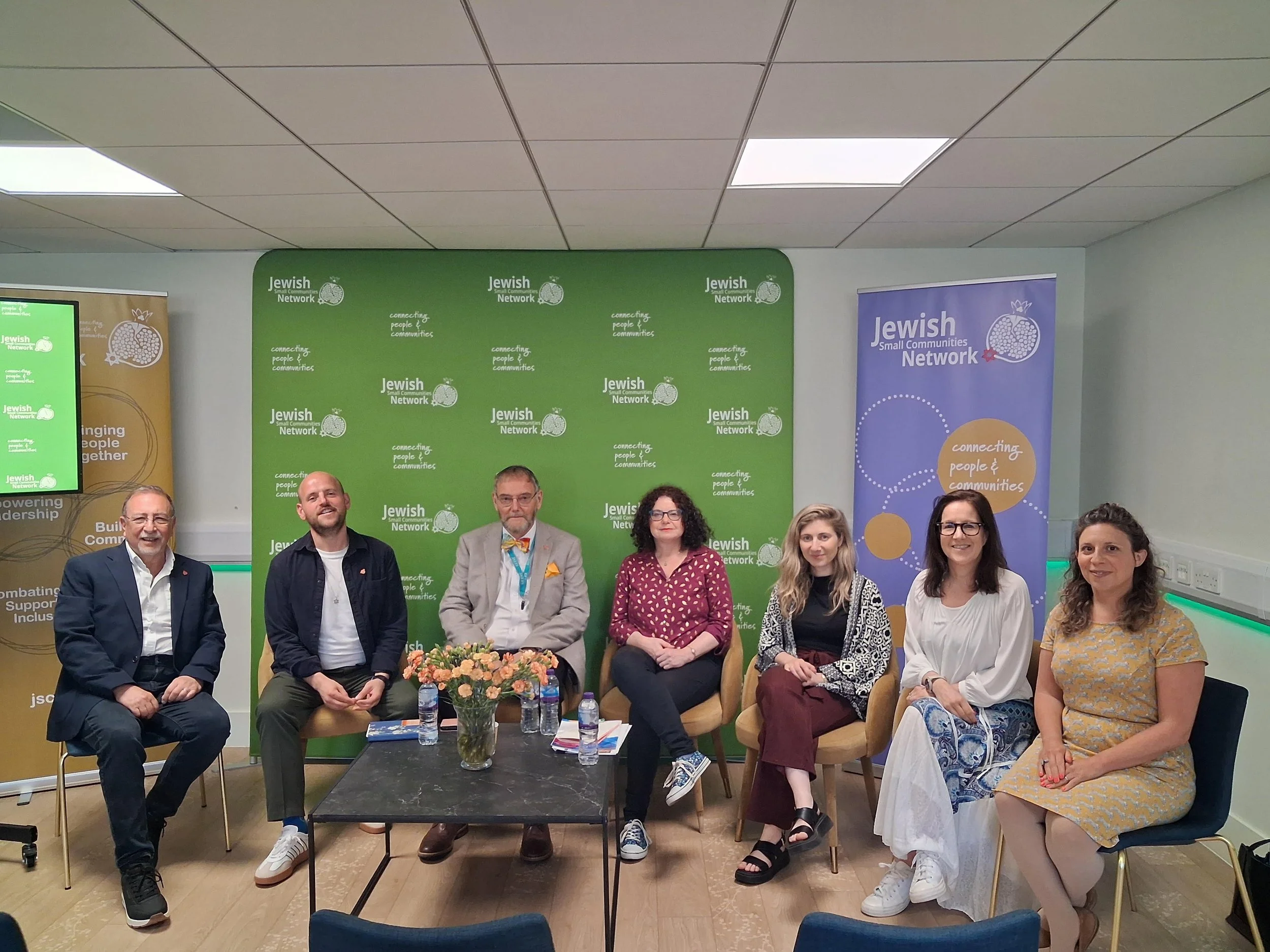
At the end of May we travelled to Brighton to take part in "Roots or Routes," a community conversation hosted by the Jewish Small Communities Network at BNJC. It was the closing event of a residential retreat for JSCN's Empowering Leadership Programme, and we were proud to share the platform with a remarkable group: Danielle Shane of WIZO UK, Howard Duckworth of York Liberal Jewish Community, Dany Louise of Hastings Jewish Community, Ayana Maor-Haver of the Jewish Agency, and Dr Rebecca Graber of the University of Chichester, with Ed Horwich of JSCN hosting.
The question at the heart of the evening was deceptively simple. Roots or routes? Do we put down roots where we are, or do we look to the route that comes next? Our answer, speaking for Plymouth Jewish Community CIC, was that the two are not opposites. You can do both, but only if you are brave enough to plant yourself firmly in place first.
We spoke about our theory of change, which we call radical moderation. It is not retreat, and it is not exodus. It is visible, confident presence in the life of the city we call home. It rests on three things: place, pride and purpose, and on the conviction that none of it is possible alone.
Place matters because Plymouth's Jewish community dates back to the 1740s. The synagogue on Catherine Street, built in 1762, is the oldest Ashkenazi synagogue still in use in the English-speaking world. We did not simply arrive in this city. We helped build it. That history is both our foundation and our argument: Jewish people have always belonged in British civic life.
What struck us most, listening to the other communities in the room, was how often the same lesson surfaced. From York to Hastings, those who chose to speak openly about who they are found solidarity rather than danger. The instinct to keep a low profile, however understandable, holds communities back. Visibility, it turns out, is a form of protection.
Dr Rebecca Graber offered the framework that tied it all together. Resilience, she explained, is not a fixed trait that you either have or do not have. It is a process, built over time through social connection and the willingness to both give and receive it. She also made a point that has stayed with us: joy is serious business. Our traditions actively command us to seek out beauty and celebration. Resilience cannot only be about responding to hardship. It has to be about building something more.
